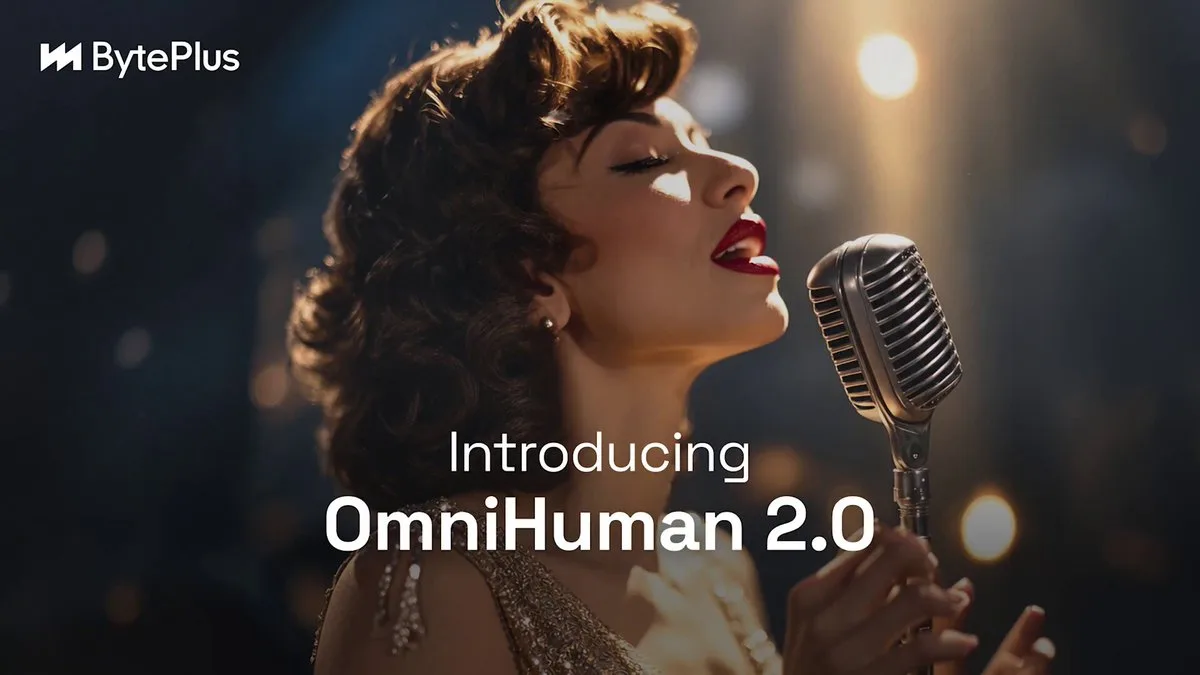
OmniHuman 2.0 is live.
It doesn't just sync lips — it understands your audio. Feed it any track, speech, music or dialogue, and it reads the tone, emotion, and every word, then performs it. Every syllable lands.
Now generate up to 5 minutes of video in a single continuous shot, up from 60 seconds, with no stitching required.
And 𝟰𝟬%+ 𝗰𝗵𝗲𝗮𝗽𝗲𝗿 — $0.12 → $0.07/sec. Better quality, lower cost.
Deeper understanding. Longer takes. Lower price.
byteplus.com/en/product/OmniHuman
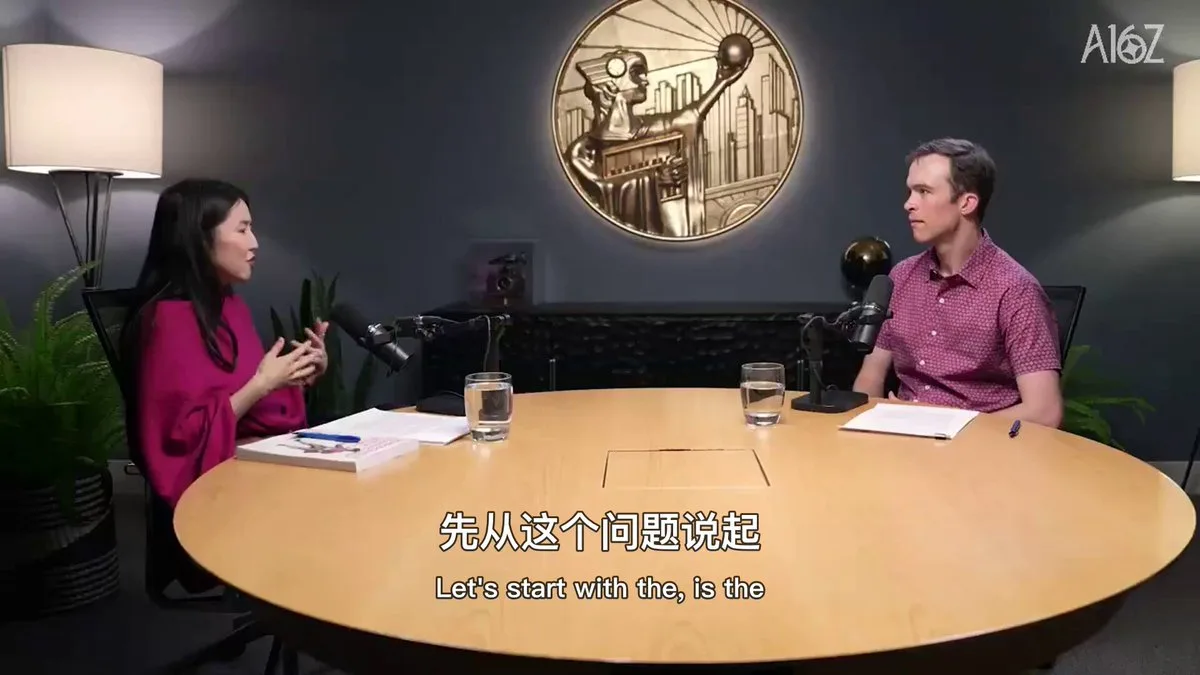
Nathan Lambert, former post-training co-lead at the Allen Institute for AI, now launching Trillium, a nonprofit open AI lab, joins a16z's Lisha Li to discuss whether open models can really keep up with the frontier.
When he tells researchers in China that an average OpenAI researcher reportedly has five thousand H100s to work with, "their jaw just falls to the floor." In his view, Chinese labs have the talent but are mostly short on compute.
He also thinks the distillation story is overblown. Based on the research, he puts its edge at a few months, and says "there's a bit of cope" in thinking only American labs can build good models.
A lot of frontier progress outside math and code comes down to labs buying 1) data and 2) RL environments. It's a multibillion-dollar market, and some of it is sloppy enough to teach models to reward hack.
That's a big part of why Trillium exists. Nathan wants to give away the environments other people would sell, and show exactly how his team uses AI to build AI, including where the models still get stuck. His bet is that the more people can see how this works, the better prepared everyone is for what's coming.
0:55 Can open models keep up with the frontier?
2:05 What it takes to reach the frontier
3:55 Open weights and the fast-follower playbook
8:25 Chinese labs: equal talent, less compute
9:55 Why distillation is harder than it looks
14:55 Is distillation theft or competition?
16:20 The lab flywheel vs owning your weights
21:45 Can general models beat every specialist?
26:30 AI at 1% of today's cost in 4 years
27:15 The RL env boom and reward hacking
31:30 What Trillium will build in the open
35:30 Breaking into AI in the age of AI slop
38:05 Open-sourcing how AI builds AI
44:25 Why Nathan isn't pre-training
49:45 Agent swarms and why lab secrets leak
54:25 Fast takeoff vs risks already here
YouTube: youtu.be/BKuK0M6oDTI@natolambert@trillium_labs@lishali88
Wan 3.0 来了
这动画质量确实有点惊艳啊!
而且 Wan 3.0 的价格只要 $0.042/秒
生成速度也非常快
相比Seedance似乎达到了一个性价比比较高的状态
说真的,如果 AI 动漫能做到这个水准,我是完全愿意看的…
目前 Wan 3.0 已经在 Higgsfield 上线,免费无限生成
Higgsfield API 还有 60% OFF 优惠,感兴趣的可以去试试
Wan 3.0 is now UNLIMITED on Higgsfield for 7 days.
60% OFF on Higgsfield API.
> Advanced motion design, animation and live-action realism
> Consistent characters across every shot
> Top-tier quality at an affordable price
Available now at Higgsfield. Limited offer.
Federal prosecutors have charged OpenAI engineer Abdulrahman Alfozan, 35, a Saudi national, with using or attempting to use a device to intercept oral communications, the Justice Department said Tuesday. He is accused of hiding a recorder in an executive conference room at OpenAI’s San Francisco offices. He was arrested Oct. 9 and appeared in federal court Tuesday. The charge is an allegation in a criminal complaint, and he has not been convicted.
According to the complaint, OpenAI staff found the device on or about Sept. 30, plugged into a USB port on the back of a TV and concealed in toilet paper. OpenAI determined it was installed around Sept. 28 and that its contents were encrypted. The complaint alleges CCTV footage showed Alfozan near the room on multiple dates, though he had no authority to access or attend meetings there, and that before Sept. 28 he used a productivity tool to ask about building addresses, meeting rooms, calendars and executive locations.
It further alleges that on Oct. 5 he was seen looking behind the TV, and that OpenAI security later found a second, similar recording device in a bag he left unattended in another room, along with his wallet and ID.
If convicted, he faces up to five years in prison and a $250,000 fine. The release does not allege he acted for a foreign government, does not give a motive, and does not say what, if anything, the device recorded. FBI Director Kash Patel called protecting American AI innovation “one of our highest counterintelligence priorities.”
OpenAI said it used its internal AI models to identify him and trace the device, and that it has no indication he accessed or took model weights, source code or customer data. The company fired him. The FBI is investigating.
Source: justice.gov/opa/pr/saudi-national-arrested-installing-surreptitious-audio-recording-device-openai
We discovered a sophisticated recording device that was hidden inside one of our offices. We used our models to understand the device and where it had come from, identifying that a specific employee had planted it a few days earlier. We referred the matter to the FBI, and we’re grateful to the agents and prosecutors who moved quickly to make an arrest. The FBI’s investigation is ongoing and we will continue to support their work.
At this time, we have no indications of this individual inappropriately accessing or exfiltrating model weights, source code, or customer data. The employee was terminated.
We take protecting our technology, data, and people seriously, and as a matter of national importance. Our security program is designed to protect against a wide range of threat actors, from insider risks to cybercriminals to nation states, and this case is an example of how AI can help address these sophisticated security threats.