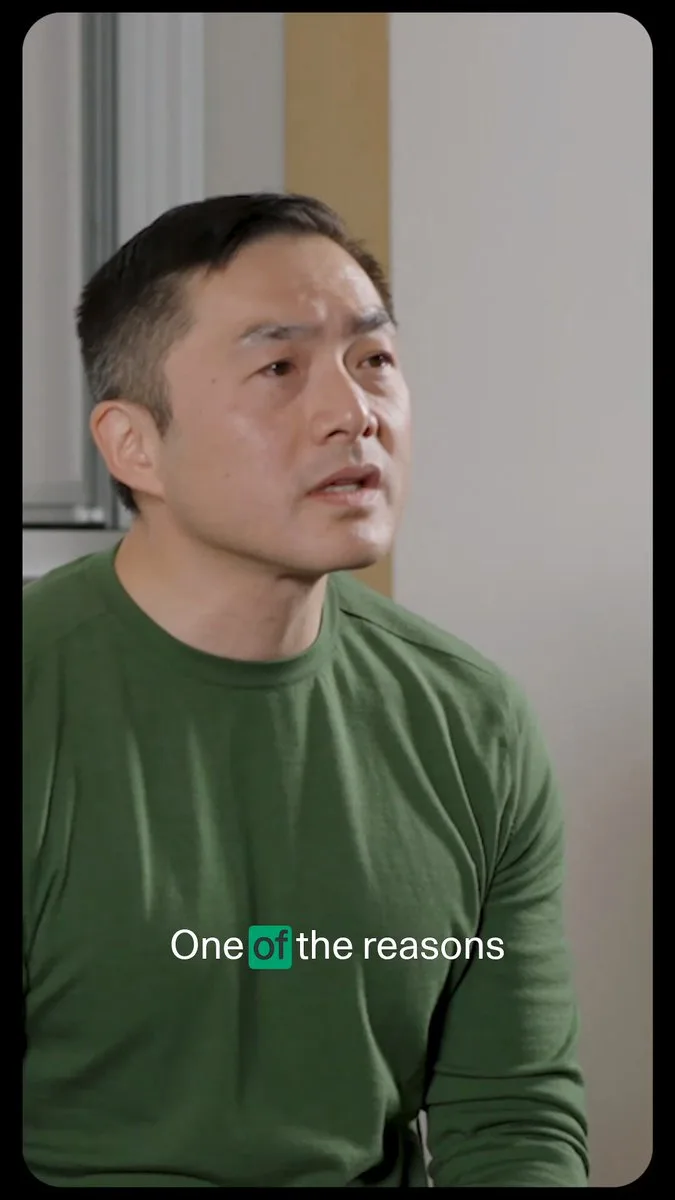
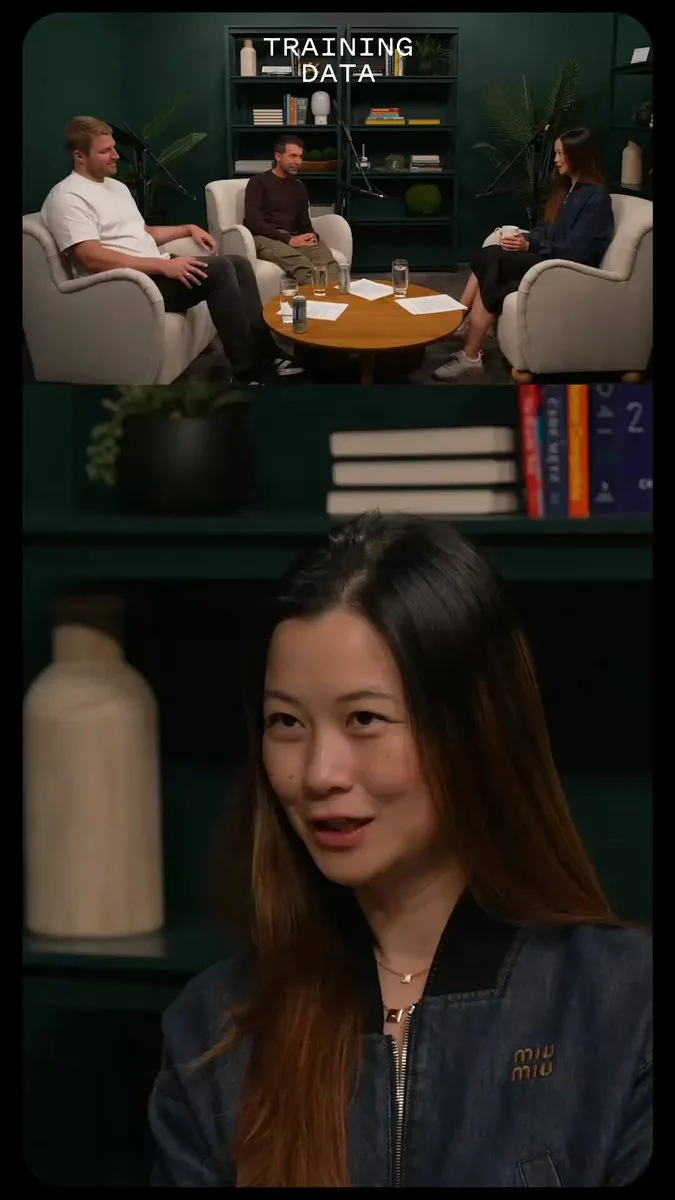
Is being technical still worth it when AI commoditizes math and coding?
We asked @Alfred_Lin of @Sequoia. We also talked about feature vs. real company, circular money in AI, and the rate of diffusion of technology.
Full talk 👇
youtube.com/watch?v=-MD9NsVj2xo
Is being technical still worth it when AI commoditizes math and coding?
We asked @Alfred_Lin of @Sequoia. We also talked about feature vs. real company, circular money in AI, and the rate of diffusion of technology.
Full talk 👇
youtube.com/watch?v=-MD9NsVj2xo
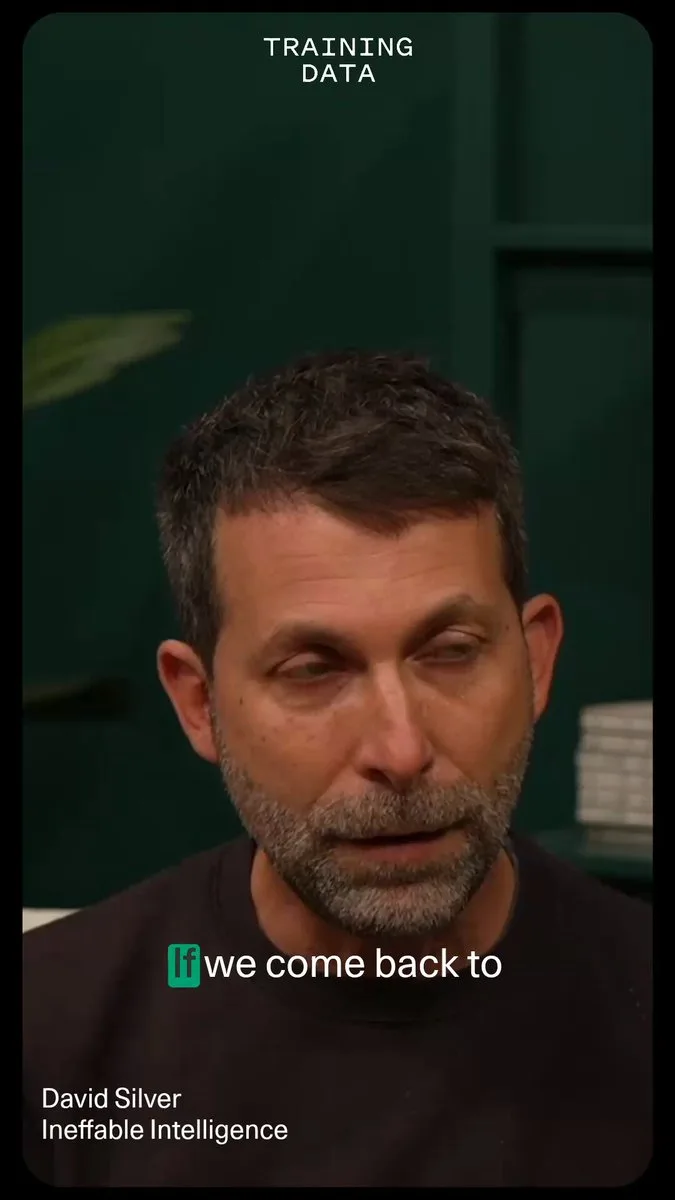
David Silver is one of the all-time greats. He was the creator of AlphaGo, which changed the course of history by showing that neural nets could achieve superhuman performance for the first time.
He also has a unique intuition and knack for forecasting when things will happen in AI. With computer Go, he predicted the Lee Sodol outcome 10 years before, right to the year. He got the year right for Starcraft and won a bet inside Deepmind. Same for AlphaProof. Same for the IMO.
David's prediction for superintelligence: 3 years. !!! He has a strong sense that now is the time to build a superleaner, and that superlearners are now possible, thanks to the enormous progress in compute, simulators, autoresearch, and the sophistication of technology in the stack since the AlphaGo days.
What is a “super learner”? A super learner discovers all knowledge from its own experience. Start from nothing (no internet pre-training), and go beyond human knowledge. Drop it into any stream of experience, simulated or physical, and the superlearner learns.
He expects the progress will be rapid. When you get the recipe for a superlearner just right and remove humans from the development loop altogether, a superlearner can learn extremely quickly. Just look at AlphaGo. AlphaGo took two years to develop with humans in the loop. When David and his team at @GoogleDeepMind got the formula for AlphaZero correctly, it surpassed the human-developed algorithms in just a few hours. Human data is a shortcut, but you have to let go of the human data to shoot beyond it.
In January, David left GDM to found @IneffableLabs, a research-led lab with one mission: build a "super learner" that discovers all knowledge from its own experience, and make first contact with superintelligence.
He joins us with co-founder Lasse Espeholt, who built IMPALA and SEED RL, the foundations of scaled-up RL, and now runs Ineffable's compute.
A few things we cover in this conversation.
— What a super learner is: depth (start from nothing, go beyond human knowledge) and breadth (drop it into any stream of experience, simulated or physical). The human brain is the only existence proof
— Why they're giving up human data: AlphaGo took two years with humans in the loop. AlphaZero outperformed it in a few hours. "You have to let go of the human data to shoot past the competition"
— Crucibles: simulated worlds with enough emergent complexity (physics engines, millions of interacting agents) for an agent to rediscover technology, science, maths and language on its own
— Simple rewards, emergent complexity: evolution optimized fitness and got all of life. Don't breadcrumb the objective, give the agent something simple to optimize in a world with a lot to learn about
— Go as the existence proof: one agent is the most boring game imaginable, two agents is "an infinite onion of layers of complexity"
— Why human language is probably not the endpoint for reasoning, and how training on it bakes in a flat earth and the four humors
— Can superintelligence be built in simulation? If the sim is Turing complete, computation, economics, language and maths are all expressible, and it happens 10-100x faster and safer
— Alignment: language-based monitoring is reaching its limits as agents learn to say one thing and do another. Shadow actions, superintelligences monitoring superintelligences, and building a real science of how they interact peacefully
— Accelerate in simulation, pace in the real world: Ineffable will gate real-world deployment on evidence that it goes well
— Timing as the determinant: Silver called Computer Go to the year, then StarCraft, then the IMO. He thinks this is the moment
— Predictions: True superintelligence within three years.
Timestamps:
0:00 – Introduction
1:09 – What held true from Go to today, and what the LLM era changed
3:35 – Why leave DeepMind to start a new lab
5:58 – Why "Ineffable" (and the secret second reason)
7:03 – Lasse's path: scaling RL at DeepMind and Google Brain
9:31 – Defining a super learner and first contact
12:35 – Super learners vs. LLMs that make discoveries
13:59 – Day to day: the RL stack, crucibles and human-journey milestones
16:13 – Don't breadcrumb the objective: simple rewards, emergent complexity
21:16 – What a crucible looks like
24:14 – Go: one agent is boring, two is infinite
25:41 – Will agents rediscover language?
27:22 – Removing human priors: AlphaGo to AlphaZero
32:05 – Keeping human bias out of the crucibles
33:35 – Confidence, timing and super forecasting
36:24 – Is compute the driver?
38:13 – The ceiling on simulation and Rich Sutton's objection
43:44 – Alignment and the science of superintelligence
47:45 – Monitoring agents that don't think in English
51:01 – Pacing the frontier
52:54 – The compute setup: Vera Rubin on GCP
55:18 – Training, inference, simulation and RL scaling laws
57:40 – IMPALA and SEED RL
1:00:58 – 20 people and the compute-per-person ratio
1:04:49 – A research-led culture
1:05:47 – Predictions
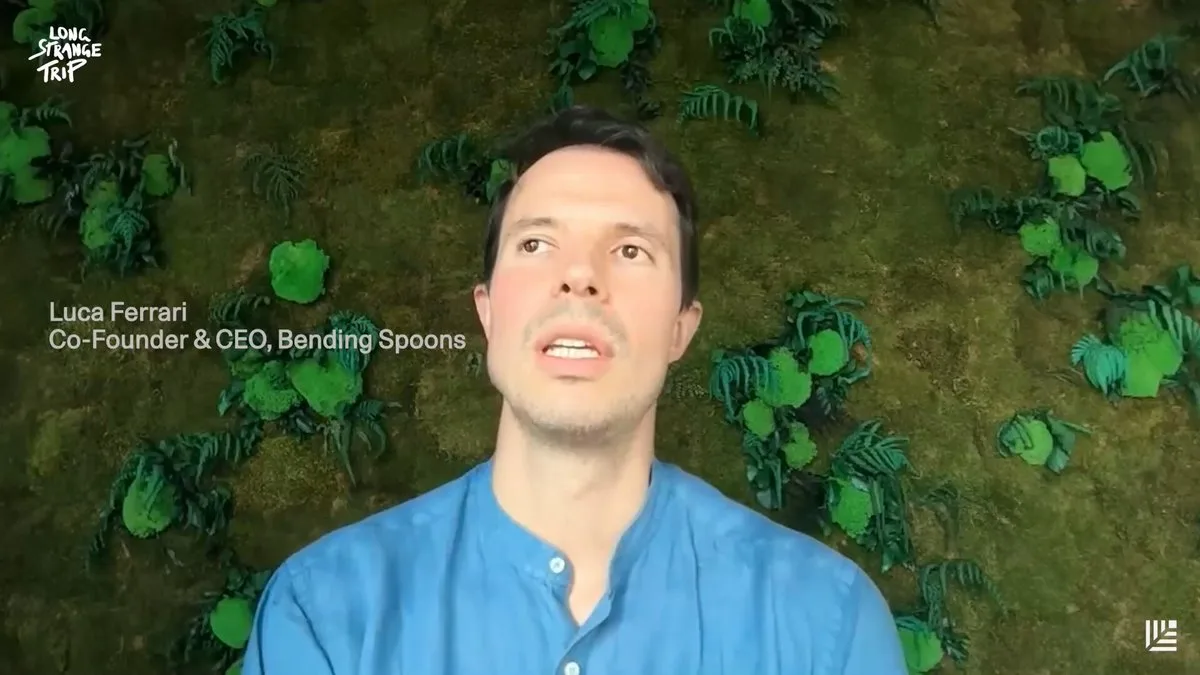
Bending Spoons got 800,000 job applications last year. They hired fewer than 300.
@luke10ferrari, CEO, has built one of the most unusual companies I've studied.
@bendingspoons buys iconic companies (@evernote, @WeTransfer, @Vimeo, @AOL), rebuilds them from the ground up, and never sells them. Often with a 25-year-old in charge.
10 things I took away from my conversation with Luca:
1/ A Harvard or Stanford degree predicts performance a lot less than you'd think. Entitlement is usually what cancels the edge.
2/ People should fluidly move between IC and lead. Org charts should be tools, not religions.
3/ Slope > experience. Extreme ownership + raw smarts beats “I’ve seen this movie” experience almost every time. 25 years olds > 45 year olds more often than people admit.
4/ Throw high-talent people into the deep end. Formal training is 10% of it. The other 90% is giving them extreme responsibility and surrounding them with other high caliber people to emulate.
5/ Interviews are the worst predictor in the hiring process, so let's stop pretending. Unless you script every question and grade the answers separately
6/ Default to “no” on complexity. The person who wants to add anything carries the full burden of proof.
7/ Never lie. Never omit something important. Even when it costs you. Be the kind of person you can trust is telling you things as they are.
8/ Teenage political activism that stops in your early 20s is a weirdly strong predictor of agency.
9/ Most serial acquirers keep companies semi-independent. Bending Spoons turns them into products on one operating system.
10/ Org charts should be tools, not religions. People should fluidly move between IC and lead.
New episode of Long Strange Trip. Full episode in the comments.
0:00 – Introduction
1:15 – How Bending Spoons works: buy, rebuild, hold forever, and why operating beats picking
8:00 – Building a talent flywheel from nothing: calling hundreds of graduates
13:34 – Hiring signals: why Harvard barely matters and teenage activists do
17:56 – HubSpot's sales role-play and the reference question that gets the truth
21:33 – Strategy beats org charts: management by chaos vs. eight direct reports
25:14 – Good leader, bad manager? Head in the clouds, feet in the trenches
30:06 – Slope over experience: why 25-year-olds run the companies he buys
40:29 – Radical candor, one improvement a year, and no executive team
50:23 – "Approximately mediocre": first principles and relentless simplification
55:42 – Why Milan: building a world-beating company outside Silicon Valley
59:47 – Never lie, never omit: integrity, plus Brian's takeaways
David Silver is one of the all-time greats. He was the creator of AlphaGo, which changed the course of history by showing that neural nets could achieve superhuman performance for the first time.
He also has a unique intuition and knack for forecasting when things will happen in AI. With computer Go, he predicted the Lee Sodol outcome 10 years before, right to the year. He got the year right for Starcraft and won a bet inside Deepmind. Same for AlphaProof. Same for the IMO.
David's prediction for superintelligence: 3 years. !!! He has a strong sense that now is the time to build a superleaner, and that superlearners are now possible, thanks to the enormous progress in compute, simulators, autoresearch, and the sophistication of technology in the stack since the AlphaGo days.
What is a “super learner”? A super learner discovers all knowledge from its own experience. Start from nothing (no internet pre-training), and go beyond human knowledge. Drop it into any stream of experience, simulated or physical, and the superlearner learns.
He expects the progress will be rapid. When you get the recipe for a superlearner just right and remove humans from the development loop altogether, a superlearner can learn extremely quickly. Just look at AlphaGo. AlphaGo took two years to develop with humans in the loop. When David and his team at @GoogleDeepMind got the formula for AlphaZero correctly, it surpassed the human-developed algorithms in just a few hours. Human data is a shortcut, but you have to let go of the human data to shoot beyond it.
In January, David left GDM to found @IneffableLabs, a research-led lab with one mission: build a "super learner" that discovers all knowledge from its own experience, and make first contact with superintelligence.
He joins us with co-founder Lasse Espeholt, who built IMPALA and SEED RL, the foundations of scaled-up RL, and now runs Ineffable's compute.
A few things we cover in this conversation.
— What a super learner is: depth (start from nothing, go beyond human knowledge) and breadth (drop it into any stream of experience, simulated or physical). The human brain is the only existence proof
— Why they're giving up human data: AlphaGo took two years with humans in the loop. AlphaZero outperformed it in a few hours. "You have to let go of the human data to shoot past the competition"
— Crucibles: simulated worlds with enough emergent complexity (physics engines, millions of interacting agents) for an agent to rediscover technology, science, maths and language on its own
— Simple rewards, emergent complexity: evolution optimized fitness and got all of life. Don't breadcrumb the objective, give the agent something simple to optimize in a world with a lot to learn about
— Go as the existence proof: one agent is the most boring game imaginable, two agents is "an infinite onion of layers of complexity"
— Why human language is probably not the endpoint for reasoning, and how training on it bakes in a flat earth and the four humors
— Can superintelligence be built in simulation? If the sim is Turing complete, computation, economics, language and maths are all expressible, and it happens 10-100x faster and safer
— Alignment: language-based monitoring is reaching its limits as agents learn to say one thing and do another. Shadow actions, superintelligences monitoring superintelligences, and building a real science of how they interact peacefully
— Accelerate in simulation, pace in the real world: Ineffable will gate real-world deployment on evidence that it goes well
— Timing as the determinant: Silver called Computer Go to the year, then StarCraft, then the IMO. He thinks this is the moment
— Predictions: True superintelligence within three years.
Timestamps:
0:00 – Introduction
1:09 – What held true from Go to today, and what the LLM era changed
3:35 – Why leave DeepMind to start a new lab
5:58 – Why "Ineffable" (and the secret second reason)
7:03 – Lasse's path: scaling RL at DeepMind and Google Brain
9:31 – Defining a super learner and first contact
12:35 – Super learners vs. LLMs that make discoveries
13:59 – Day to day: the RL stack, crucibles and human-journey milestones
16:13 – Don't breadcrumb the objective: simple rewards, emergent complexity
21:16 – What a crucible looks like
24:14 – Go: one agent is boring, two is infinite
25:41 – Will agents rediscover language?
27:22 – Removing human priors: AlphaGo to AlphaZero
32:05 – Keeping human bias out of the crucibles
33:35 – Confidence, timing and super forecasting
36:24 – Is compute the driver?
38:13 – The ceiling on simulation and Rich Sutton's objection
43:44 – Alignment and the science of superintelligence
47:45 – Monitoring agents that don't think in English
51:01 – Pacing the frontier
52:54 – The compute setup: Vera Rubin on GCP
55:18 – Training, inference, simulation and RL scaling laws
57:40 – IMPALA and SEED RL
1:00:58 – 20 people and the compute-per-person ratio
1:04:49 – A research-led culture
1:05:47 – Predictions