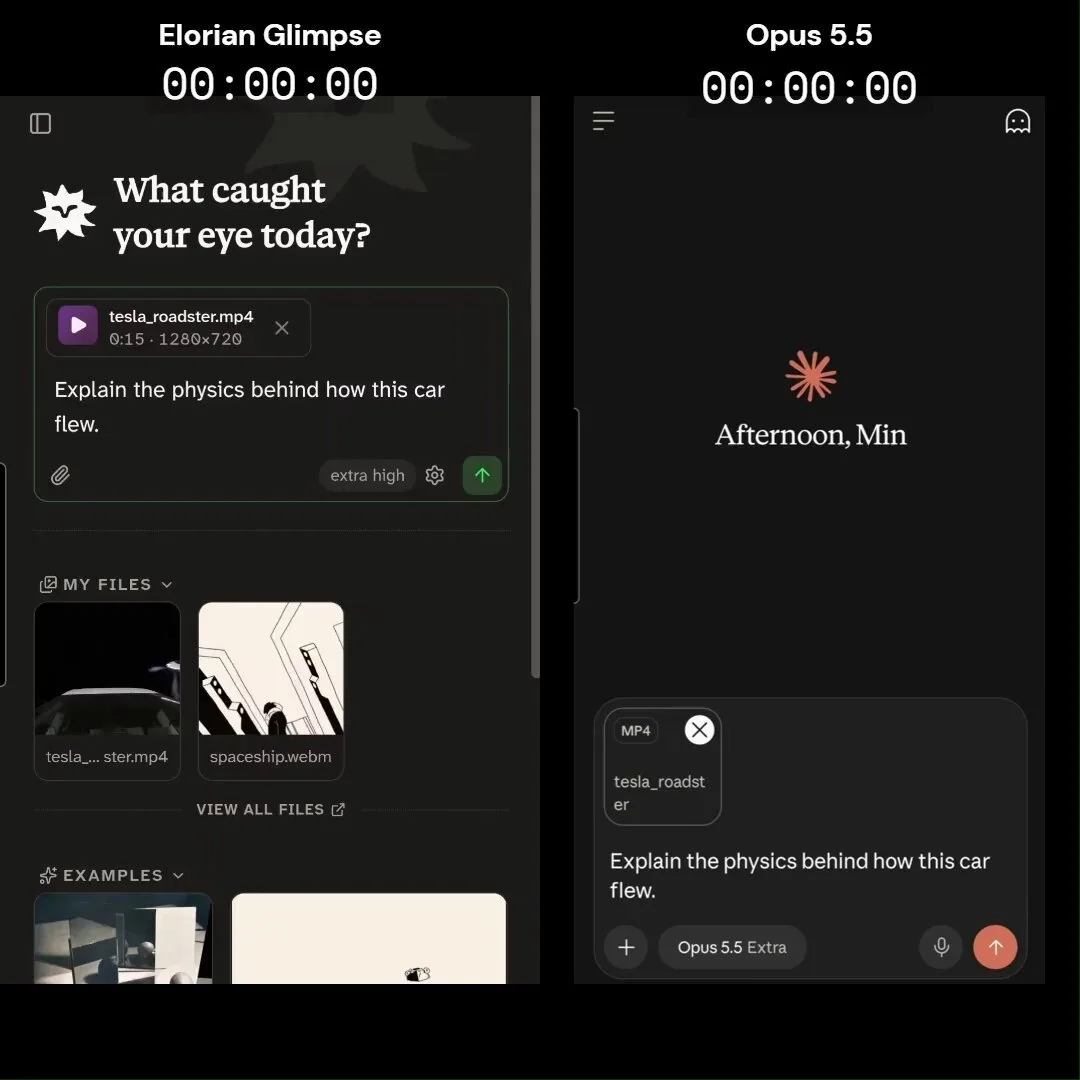
Spent years watching models ace a single image and completely whiff on anything that moves or changes angle. Today we’re fixing that.
Try Glimpse now, our first visual thinking model with competitive frontier performance compared to Astra on key public visual reasoning benchmarks.
这是AI领域最重要的成果之一,没有例外。
TLDR:神经网络不是一团乱麻(多义性理论是错的)。你可以直接研究它们自己的神经元,而不需要先用第二个模型去“展开”它们。Qwen-32B里90%的神经元只干一件事。
Nick Cammarata创办了OpenAI的可解释性团队,现在在Goodfire。他研究LLM如何工作已经十年了。
理解和对齐模型行为,这件事的利害关系前所未有地高。模型已经在数学上取得了超人的成绩,能搞垮生产环境的软件系统,还在改变白领工作的本质。这项工作也许终于能让我们有意识地设计LLM,并塑造它们的行为方式。
这是一篇很长、极其精彩的读物。
机器翻译·
Nick@nickcammarata
interpretability might be the most important scientific problem in the world right now, as I don't think we can solve alignment if we don't know what we're building. I think I have good news about it. I co-authored early work in mechanistic interpretability at OpenAI and came away pessimistic, because neural networks appeared to fold into arbitrary tangled knots. years later, I started openai's first large-scale automated interpretability project, finding about 2% of neurons legible with the primitive tools we had
with modern agentic tools and a much closer look, the picture looks totally different. the vast majority in models up to trillions of parameters are legible, and their circuits beautiful. many famous examples of tangled neurons turned out to be misunderstood. The roadblocks I expected mostly aren't there. I now think ambitious interpretability will be solved by the time we need it most, and possibly quite soon, as automated scientists keep improving. it may be a bitter lesson for interpretability: the simple thing, at absurd scale, works
already-clean.goodfire.com/